The dancing
Georgian folk dance, explained
The dances behind a Georgian folk show: kartuli, khorumi, the mountain and city dances, and what a dinner-night programme is likely to draw on.
Book the Tbilisi dinner and dance night ↗Quick answer
Georgian folk dance is a set of regional and character dances, from the couple's dance kartuli to the war dance khorumi and the sword dances of the mountains. A dinner-night show draws on that repertoire with professional dancers, but the programme varies, so no particular dance can be promised for your night.
Where Georgian folk dance comes from
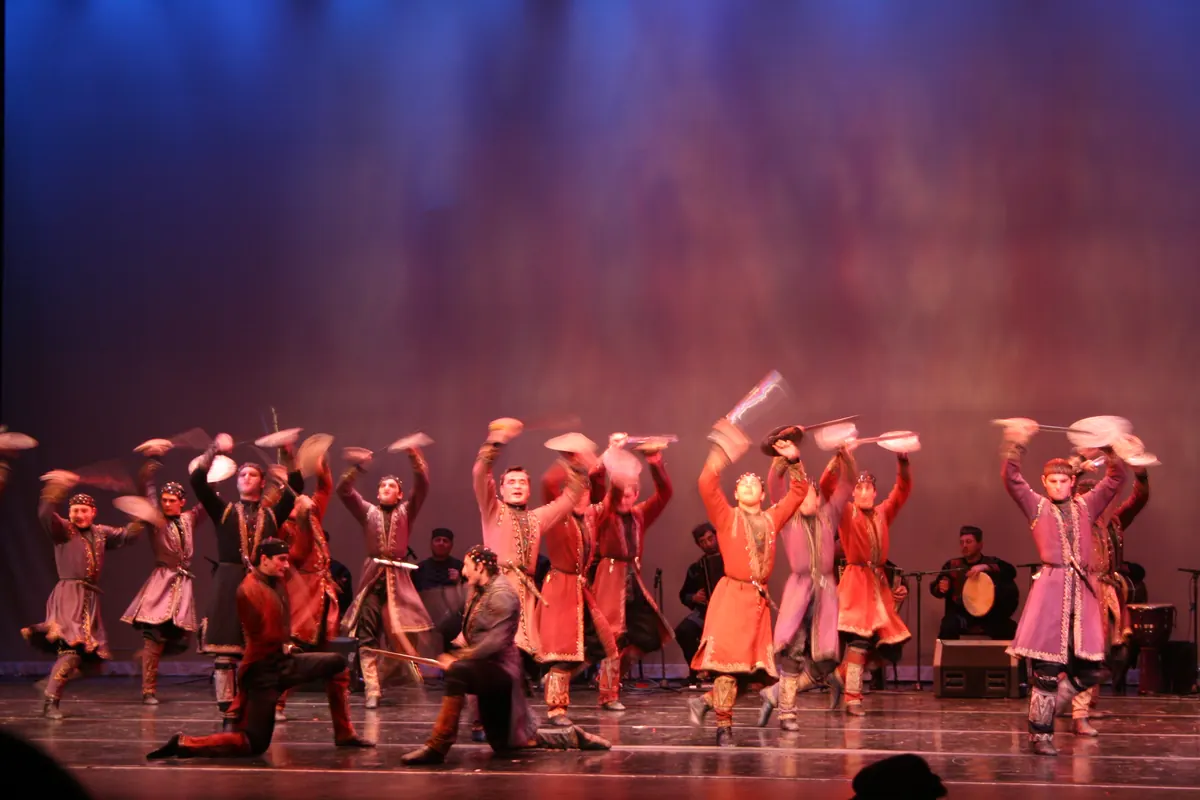
Wikipedia says Georgian dance stems from military moves, sports games and the dances celebrated at holidays in the Middle Ages, and that it was popularised by the founders of the Georgian National Ballet, Iliko Sukhishvili and Nino Ramishvili. Georgia's tourism administration points further back: a silver bowl from Trialeti, about 3,700 years old, shows masked hunters standing in a row, and pottery from the Imiri and Arukhlo settlements in Kvemo Kartli carries figures it reads as dance. It adds that every region has its own dance, with its own steps and music.
Kartuli, the couple's dance
Georgia's tourism administration calls kartuli the crown jewel of Georgian choreography and says it carries no regional markers. The rules are strict. The man shows deference to the woman and must not touch her or her clothing, the woman begins the dance, the man watches her throughout, and he does not leave until she has finished. Wikipedia adds that his upper body stays still while she glides across the floor like a swan on a lake. It is a dance about restraint, with a bow from the woman to end it.
Khorumi and the war dances
Khorumi is a war dance with four parts, according to Wikipedia: searching for a campsite, scouting the enemy camp, the fight, and the victory celebration. It is set to a five-beat rhythm and traditionally accompanied by a drum, the doli, and a bagpipe, the chiboni. Wikipedia places its origin in Guria, while Georgia's tourism administration says its roots lie in Adjara and that only men dance it. The sword-and-shield dance parikaoba, from the mountain region of Khevsureti, ends its fights when a woman throws down her headdress, only for the men to start again.
Mountain dances
Kazbeguri comes from the Kazbegi area of the Caucasus and is danced mainly by men in black. Wikipedia says it was created to portray the cold, rough climate of the mountains, through vigorous movement and foot stomping. Khevsuruli tells of a flirting couple and a rival suitor, and a woman's veil stops the fight until she leaves. Mtiuluri is a competition between two groups of young men that moves from complicated figures to tricks on the knees and toes and ends with everyone dancing a finale. Each one reads as a short story told without words.
City and festive dances
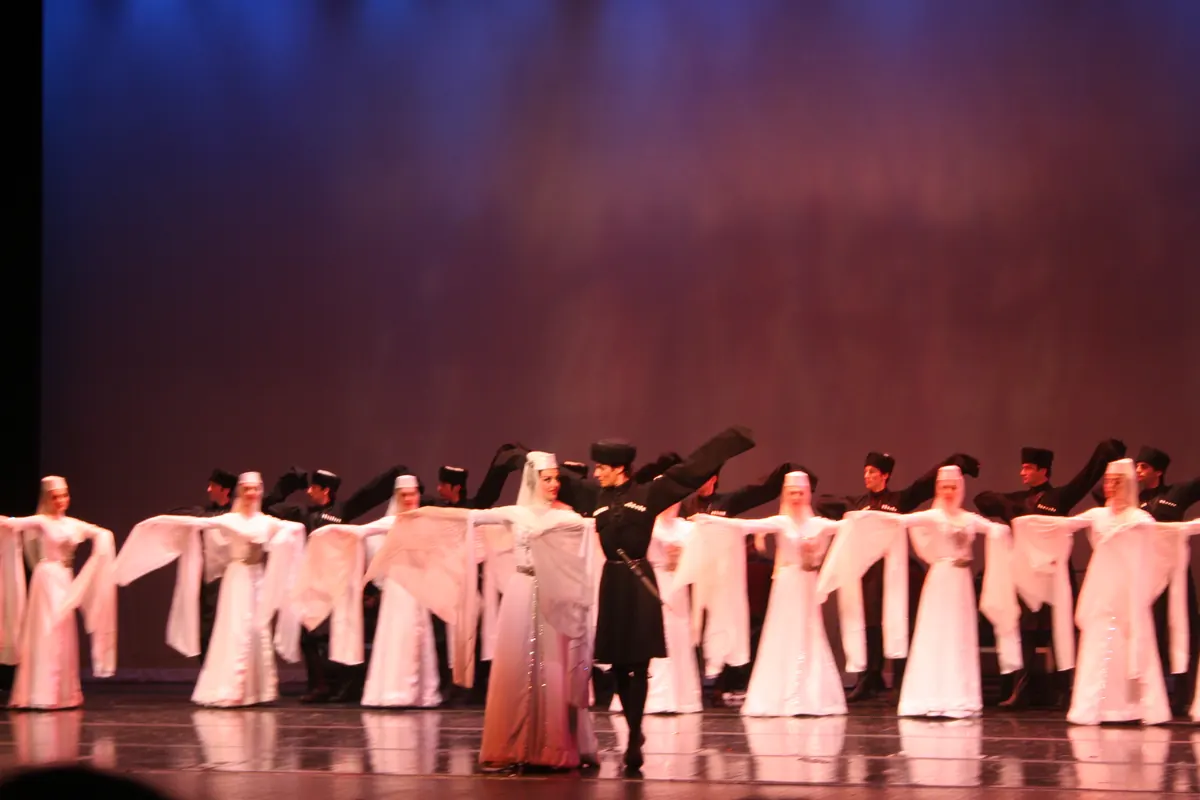
Kintouri and shalakho portray old Tbilisi: the kintos were small merchants in black who wrapped fruit and vegetables in a silk shawl from their belts. Davluri is a city dance of the aristocracy, and Wikipedia says it simulates an aristocratic feast on stage. Acharuli, from Adjara, is bright and playful, with red-heavy costumes and relaxed flirting between men and women. Samaia is danced by three women and, in its present form, represents Queen Tamar, with costumes drawn from the few frescoes that show her.
From the village floor to La Scala
Georgia's tourism administration notes that the Sukhishvili ensemble danced the Gurian perkhuli called partsa on the stage of La Scala in 1969, the first time a folklore troupe had appeared at the Milan opera house. The same article lists four dances as Intangible Cultural Heritage Monuments of Georgia: perkhuli, khorumi, the Ajarian gandagana and kartuli. Perkhuli is described as the oldest dance with singing, one where people join hands, and it does not restrict who may take part by number or gender.
What to expect at a dinner-night show
A restaurant show is a compact version of all this. Professional dancers perform Georgian folk dances in costume, and a programme might lean on couple's, war, mountain or festive dances. Which ones you see varies between nights, so treat the list above as a vocabulary, not a promise. On the Tbilisi hosted night, guests are welcome to join the dance floor later, where Georgian and international music plays; nobody is expected to know the steps, and the professionals have already done the hard part.
Frequently asked questions
What is the best-known Georgian dance?
Kartuli, the couple's dance, which Georgia's tourism administration calls the crown jewel of Georgian choreography. It is built on restraint: the man never touches the woman.
Is khorumi only for men?
Georgia's tourism administration says only men dance khorumi, a war dance with four parts, from searching for a campsite to celebrating victory.
Will I see a specific dance at the Tbilisi dinner night?
No. Which dances the professionals perform varies between nights. Later, guests can join the dance floor.
Sources