Which evening
Hosted night or folk-show restaurant?
A hosted social dinner with Georgian folk dance, or a table of your own at a folk-show restaurant in Tbilisi? How the two differ and how to choose.
Book the Tbilisi dinner and dance night ↗Quick answer
Choose the hosted social night if you are travelling alone or as a pair and want company, a fixed format and one ticket: a host, shared tables, a vegetarian dinner, wine, lemonade, water and a dance show are all in it. Choose a restaurant table of your own if you want meat dishes, your own party, your own pace or a different start. Neither is a family supra. The real difference is who sits at your table.
The two evenings side by side
| Hosted night | Table of your own | |
|---|---|---|
| Company | Shared tables, a host | Your own party |
| Dinner | Vegetarian, set | Your choice |
| Show | Included, then open floor | Ask the restaurant |
| Drinks | Wine, lemonade, water | Ask the restaurant |
| Getting there | Host meets you | Your own ride |
Two ways to spend the same evening
Both options put you at a Georgian table with food, wine and dancing. They differ in who is in charge. On the hosted night an organiser sells one ticket that bundles a host, shared tables, a vegetarian dinner, homemade wine, lemonade, water and a live folk-dance show, for about four hours. At a folk-show restaurant you choose yourself, you book the table, pick the dishes and settle the bill with the restaurant, and the show follows that restaurant's terms. Neither is a private family supra, which needs a family to invite you. Both are ways for a visitor to meet the food, the wine and the dancing in one evening, and which one is better depends on what you bring to the table. Choose by company and by food, and the rest follows.
What the hosted night gives you
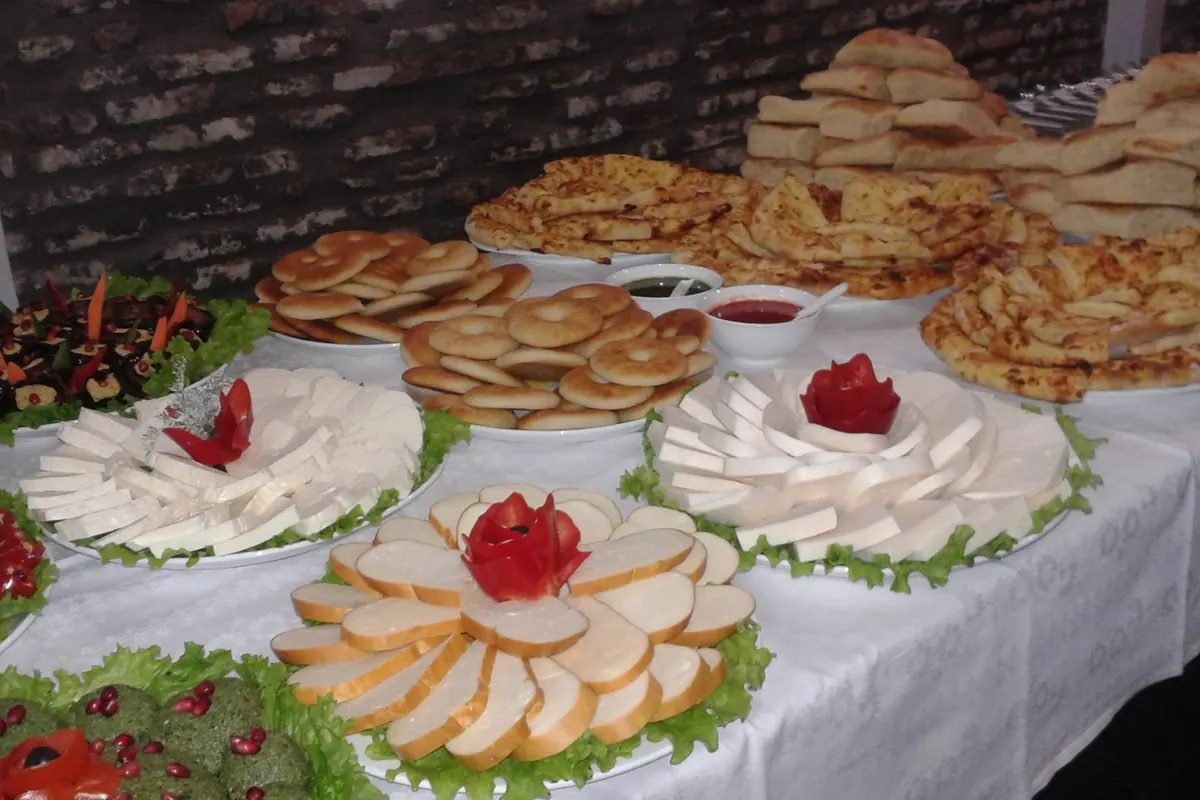
A host meets you and the other guests at a central point in Tbilisi and takes the group to the restaurant, so there is no table to find and no menu to decode. The host speaks English and Russian, and reviewers say the host also explains Georgian customs and brings strangers together. Wine at half a litre each, lemonade and water are included, a photographer is available on request, and children pay the same as adults. One option adds transfers from and back to your hotel. For a solo traveller the shared table is the point, not a side effect, and the price is one number for everything above. Reviewers also single out the host's humour and the way the group is drawn into the dancing.
What the hosted night asks of you
The format is fixed. You share tables with strangers for about four hours, the dinner is vegetarian, and the start time and meeting point follow the option you pick. Food allergies rule the ticket out, and luggage or large bags cannot come along. Some travellers say a meat option would help, and that clearer information about the vegetarian menu would too. If any of that is a dealbreaker, it is better to know before you pay than at the table. None of it is hidden; it is simply the shape of the evening, and the reason a few guests choose a table of their own. Look at the booking calendar for your date first, then fit the rest of the day around it.
What a table of your own gives you
A restaurant table you book yourself gives you control. You choose the dishes, so meat is available, you set the pace, and you eat with your own party rather than a shared table. Georgia's tourism administration calls Georgian cooking heaven for vegetarians and vegans, but the Georgian table also includes meat dishes such as mtsvadi and khinkali. The trade-off is that nobody explains the dances or the customs unless you ask, you arrange your own ride home, and whether a show is included in the price is up to the restaurant. You also carry the planning. A group of friends who like to toast can also build something closer to a supra at their own table, because the role of tamada is theirs to give.
The food question
Start with what you want to eat. The hosted night is a vegetarian Georgian dinner, which sits comfortably inside a cuisine that leans on field greens, beans, cheeses, eggplant with walnuts and bread. If a vegetarian dinner sounds like a pleasure, the question is closed. If you travel to eat khinkali, grilled meat or a long list of dishes chosen by you, a restaurant table of your own is the better fit. Neither choice is the wrong way to eat Georgian food. They are two different evenings, and many visitors would enjoy both on a longer stay. Wikipedia lists ajapsandali, a ragout of eggplants, potatoes and tomatoes, among Kakheti's notable dishes, which shows how much of the Georgian table needs no meat.
The company question
Next, think about who you want across the table. Reviewers of the hosted night describe participants from different parts of the world talking as if they already knew each other, and that is what a shared table is for. A couple on a quiet city break, a family with a fussy child or a group of friends celebrating something will often prefer a table of their own, where the conversation stays with them. A solo traveller on the first night in a new country will often prefer the host and the strangers. Decide which of those you are, and the choice is mostly made. Neither is better in itself; the question is only who you want to talk to. Either way, you are choosing company, not quality.
The dance question
Georgian folk dance has a recognisable repertoire, including the couple's dance kartuli, the war dance khorumi and the mountain dance khevsuruli, and either option may draw on it. Which dances you see varies between nights, so neither promises a particular one. On the hosted night, guests are welcome to join the dance floor later, where Georgian and international music plays. At a restaurant, ask whether guests are invited up or whether the dancing is for watching only. The folk-dance guide on this site names the dances you are most likely to meet and what each one is about. The hosted night pairs the show with an open dance floor, so the evening moves from watching to joining; at a restaurant the dancing may stay on stage.
Read next: Georgian folk dance, explained
The getting-there question
With the hosted night you meet the host at a central point, or take the option that includes transfers from and back to your hotel. On the night, the host wears a red scarf at the restaurant entrance, and the booking page gives the restaurant's address for taxi apps such as Yandex and its name for Bolt. At a restaurant of your own, you arrange the ride both ways. After about four hours of dinner and dancing, it helps to have the return sorted before the evening starts, and the transfer option exists for exactly that reason. Pick the transfer option if you are staying outside the centre or are not confident with the apps.
Questions to put to any folk-show restaurant
If you go your own way, put a handful of plain questions to the restaurant before you book. A folk-show dinner can be priced with or without the show, with or without drinks and at private or shared tables, so the answers decide whether two quotes are comparable. Ask these five, and write the answers down so you can compare restaurants side by side:
- Is the folk-dance show included in the price, or is it extra?
- Is there a vegetarian menu, a meat menu, or both?
- Are wine and soft drinks included, or ordered separately?
- Will you share a table with other guests, or have your own?
- How long does the evening run, and how will you get home?
How to choose
Take the hosted night if you are alone, in a pair or a small group, if you want a ready-made evening with a host, and if a vegetarian dinner suits you. Take a table of your own if you want meat dishes, a private table, a different start time or full control of the pace. On a longer stay you can do both, the hosted night early for company and a table of your own later for the dishes you missed. If you can only do one evening and you are travelling alone, the hosted night is the safer pick. If you are unsure, choose by food: a vegetarian dinner and a shared table point to the hosted night, meat or privacy to a table of your own.
Who this isn't for
Guests with food allergies should not book the hosted night, and nobody who dislikes shared tables or loud dancing will enjoy it. Equally, anyone who expects a private family supra will be disappointed by either option, because a family supra needs a family. What both options can do is give a visitor the food, the wine and the dancing in one evening, in a city where all three are central to how people celebrate. If that is the goal, either will do; if the goal is quiet, neither is right. If you are celebrating something private, such as an anniversary or a family reunion, a table of your own will serve you better than a shared one.
Frequently asked questions
Is a hosted night better than a restaurant table of my own?
Neither is better; they suit different travellers. The hosted night suits solo travellers and pairs who want company and a ready-made evening. A table of your own suits meat-eaters, families and groups who want control.
What does the hosted night include?
A host, a seat at a shared table, a vegetarian Georgian dinner, homemade wine at half a litre each, lemonade, water and a live folk-dance show. Hotel transfers belong to one option only.
Can I eat meat on the hosted night?
No. The dinner on the ticket is vegetarian, and some travellers say a meat option would help. If you want meat dishes, book a restaurant table of your own.
Will I share a table with strangers?
Yes. Shared tables are the format, and reviewers describe guests from different countries mixing easily with the host's help.
How do I find the group on the night?
Look for the host in a red scarf at the restaurant entrance. The booking page gives the restaurant's address for Yandex taxi and its name for Bolt.
Sources